
On this page
- What counts as commercial gutter work?
- Which gutter and drain types are used?
- How is commercial drainage sized?
- What does the local climate mean for commercial roofs?
- What do multi-family communities need?
- What should a commercial proposal include?
- How does a commercial gutter project run?
- What maintenance does a commercial system need?
- Why does ponding matter on low-slope roofs here?
- What should a property manager ask first?
- Related pages
What counts as commercial gutter work?
Commercial gutter work is roof drainage for anything larger or more complex than a single house. Beaverton Gutter Gurus connects callers with independent local gutter contractors, who give the estimates and do the work, and those who take commercial jobs typically handle:
- Retail centers and restaurants with low-slope roofs behind parapets
- Office and light-industrial buildings along the Sunset Highway and Highway 217 corridors
- Churches and schools with large pitched roofs
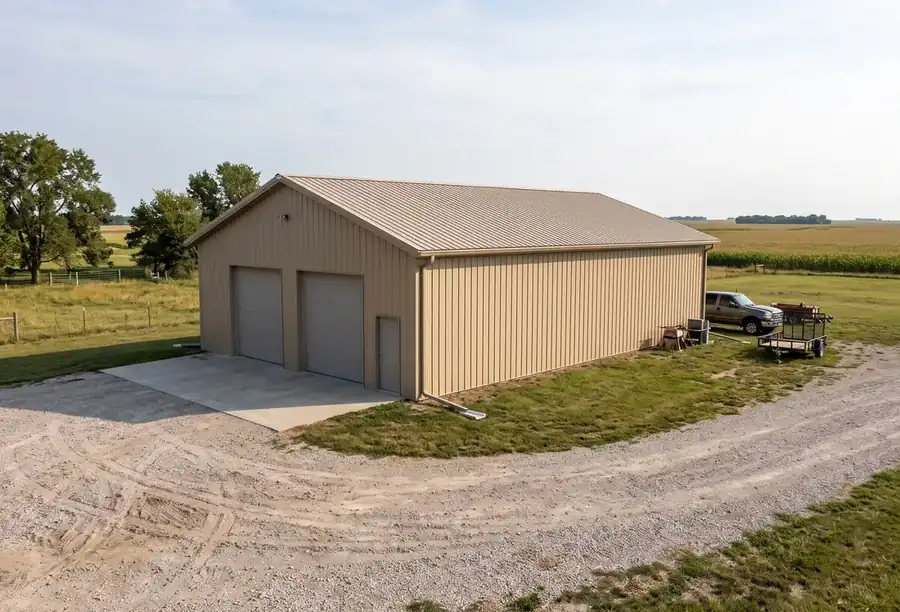
- Metal buildings and warehouses with eave box gutters
- Apartment, condominium and townhome communities
- HOA clubhouses, mail kiosks and carports
Which gutter and drain types are used?
| Type | Where it is used | Notes |
|---|---|---|
| Large K-style, 6 or 7 inch | Small commercial, multi-family | Seamless, formed on site |
| Box gutter | Metal buildings, long eaves | Heavier steel or aluminum; expansion joints |
| Scupper and collector head | Parapet roofs | Overflow path required |
| Internal roof drain | Large low-slope roofs | Strainers must be kept clear of needles |
| Round or 4x5 downspout | Large roof areas | Heavy straps; protected from vehicles |
| Downspout boot | Car parks and walks | Cast or steel base that resists impact |
How is commercial drainage sized?
Commercial drainage is sized from the roof area draining to each outlet and the rainfall rate the system is designed for. The designer or contractor then chooses gutter width, slope and downspout size from standard tables.
- Divide the roof into drainage areas.
- Take the design rainfall rate from the plumbing code tables.
- Size each outlet and downspout for its area.
- Size the gutter between outlets.
- Provide overflow so blocked drains cannot pond the roof.
What does the local climate mean for commercial roofs?
Rain on 151 days a year means a low-slope roof is rarely dry in winter, and any drain that blocks ponds water for weeks. Conifer needles are the usual culprit: they wash to the low point and felt over the strainer. Moss grows on shaded parapets and in box gutters. A maintenance schedule matters more here than in a drier climate.
Stormwater leaving the property is regulated too. Clean Water Services and its partner cities manage the storm system that carries runoff to the Tualatin River, and commercial sites often have their own stormwater facilities that roof drains must reach. Changes to where roof water goes should be checked against the site's approved drainage.
What do multi-family communities need?
Townhome and condominium communities need consistency and a plan: a survey of every building, one specification for size, metal and color, and a cleaning contract that covers the whole site on a schedule. Under firs, twice-yearly cleaning is the minimum. Downspout connections to underground lines should be inspected each visit, because one separated joint can flood a neighbor's entry.
What should a commercial proposal include?
- A roof plan showing each run and outlet
- Gutter type, size, metal and gauge
- Downspout sizes, positions and connections
- Expansion joints on long runs
- Overflow provisions
- Access method: lifts, scaffolding, roof anchors
- Schedule, hours and site protection
- CCB number, liability and workers' compensation certificates
- Warranty terms and a maintenance schedule
How does a commercial gutter project run?
- Site visit. The contractor walks the roof and the ground, photographs every drainage point and notes access.
- Survey report. Each building is listed with its gutter type, condition, moss and debris load, and where each downspout goes.
- Specification. One size, metal, gauge and color is set for the property so later phases match.
- Proposal. Priced by building or elevation, with exclusions stated.
- Scheduling. Work is phased round tenants and trading hours, and round the weather.
- Installation. Lifts or scaffolding go up, old gutter comes down, new sections are formed and fixed.
- Close-out. Photographs, warranty papers and a maintenance schedule are handed over.
What maintenance does a commercial system need?
| Task | When | Why |
|---|---|---|
| Clear gutters, scuppers and drain strainers | Late November and spring; more under conifers | Needles felt over strainers |
| Walk low-slope roofs after storms | After wind or ice | Limbs, blocked drains, ponding |
| Remove moss from box gutters and parapets | Spring | Holds water; blocks flow |
| Check sealant and expansion joints | Yearly, in dry weather | Long wet season wears seals |
| Test downspout connections to site drainage | Before the wet season | Separated pipes flood walks |
| Photograph and log condition | Each visit | Supports budgets and claims |
Why does ponding matter on low-slope roofs here?
A flat roof that ponds for a day in a dry climate is a nuisance. One that ponds from November to March is carrying weight for months, feeding moss and finding every weak seam in the membrane. Overflow scuppers set a little above the main drains are the safeguard. They should be visible from the ground, so that water coming out of one tells staff a primary drain is blocked.
| Sign from the ground | What it means |
|---|---|
| Water from an overflow scupper | Main drain or scupper blocked |
| Staining below a parapet | Water going over or through the wall |
| Plants growing at a scupper | Long-term debris build-up |
| Downspout boot dry in steady rain | Blockage above it |
What should a property manager ask first?
- Have you worked on buildings of this type and height?
- Can you provide certificates of liability and workers' compensation insurance?
- How will tenants and customers be protected during the work?
- Will you provide a condition survey with photographs?
- Do you offer a maintenance contract after installation?