
On this page
- The short answer
- What falls from the trees?
- Why are needles worse than leaves?
- Why does moss grow on Beaverton roofs?
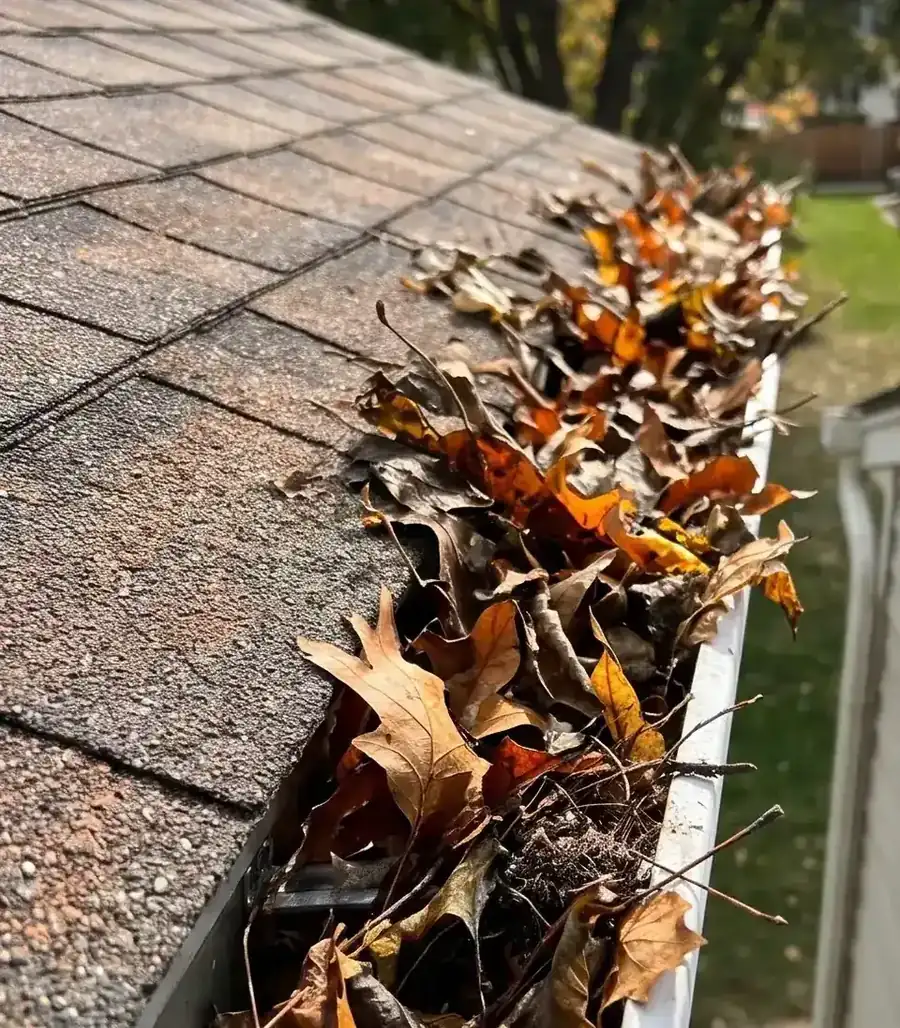
- What does moss do in a gutter?
- What do OSU and Clean Water Services advise?
- How do I stay ahead of it?
- Which guard handles needles and moss?
- What should I ask a contractor?
- What can I see from the ground?
- Which side of the house is worst?
- The bottom line
The short answer
Under conifers, gutters need either fine-mesh guards or cleaning three or four times a year. On shaded roofs, moss has to be dealt with at the roof, and the lasting fix is more sunlight. Beaverton Gutter Gurus connects callers with independent local gutter contractors, who give the estimates and do the work.
What falls from the trees?
| Tree | What it drops | When | Gutter effect |
|---|---|---|---|
| Douglas fir | Needles, twigs, cones | All year; heavy in fall and storms | Packs outlets and elbows |
| Western red cedar | Flat scale sprays | Fall and winter | Mats and holds water |
| Bigleaf maple | Large leaves, seed wings | October to November; spring | Bulk; blocks downspouts |
| Red alder | Catkins, small leaves | Spring and fall | Fine litter |
| Oregon white oak | Leaves, acorns | Late fall | Slow to break down |
Why are needles worse than leaves?
- They fall all year, so one cleaning is never enough.
- They are small and stiff, so they pass through ordinary screens.
- They interlock into a felt that holds silt and water.
- They bridge downspout elbows and block buried lines.
- Storms dump them in bulk, with twigs.
Why does moss grow on Beaverton roofs?
Moss needs moisture and shade. Beaverton gets precipitation on 151 days a year, and tall conifers shade many roofs for most of the day. Oregon State University's Solve Pest Problems site calls moist, shady rooftops ideal for moss.
OSU Extension explains what it does: moss traps debris and moisture, which speeds decay, and on asphalt and metal roofs it can lift shingles and let water reach the layers beneath. At the eave, lifted shingles send water behind the gutter instead of into it.
What does moss do in a gutter?
| Effect | Result |
|---|---|
| Holds water | Gutter never drains; weight on hangers |
| Traps silt | Forms soil; seedlings root |
| Blocks outlets | Overflow at the wall |
| Wedges into joints | Seals fail sooner |
| Keeps steel wet | Rust |
What do OSU and Clean Water Services advise?
- Let the sun in. OSU says trimming nearby trees is the most effective long-term step.
- Clean gently. Pressure washing can damage shingles; a long-handled brush or a professional is safer.
- Treat after cleaning with zinc sulfate or potassium salts of fatty acids, per the label.
- No zinc sulfate with copper gutters, downspouts or flashing.
- Disconnect downspouts during treatment. Clean Water Services advises this when applying moss control products to a roof.
- Skip zinc strips; OSU's pest site says they are not effective.
Roof moss treatment is a roofing job. A gutter contractor clears what lands in the gutter and can tell you what they see above it.
How do I stay ahead of it?
| Step | When | Why |
|---|---|---|
| Clean gutters | Late November; again late winter; spring | Needles, leaves, moss |
| Brush guards and valleys | After fall drop and storms | Keeps mesh open |
| Empty leaf traps | Through fall and winter | Protects buried lines |
| Treat roof moss | Per product label, in suitable weather | Stops it at the source |
| Have trees thinned | Any time, by an arborist | More sun; fewer limbs |
Which guard handles needles and moss?
Stainless micro-mesh is the only common guard fine enough for needles. Perforated covers, screens, reverse-curve hoods and inserts all let needles in or hold moss. See screen and reverse-curve guards.
What should I ask a contractor?
- Will you pull moss and seedlings from the gutters as well as debris?
- Will you flush the downspouts and check the underground lines?
- What do you see on the roof above each run?
- Which guard do you fit under firs, and how is it fixed?
- Do you do roof moss work, or who would you suggest?
What can I see from the ground?
| Sign | Meaning |
|---|---|
| Green line along the first row of shingles | Moss at the eave; water may be tracking behind the gutter |
| Tufts hanging over the gutter edge | Trough is full |
| Brown needle mat in the valleys | About to wash into the gutter |
| Seedlings above the gutter line | Soil has formed in the trough |
| Black streaks down the fascia | Overflow |
Which side of the house is worst?
Usually the north, and any side under conifers. Sun dries a roof and slows moss; shade keeps it wet. Walk round the house and compare the south-facing roof with the north-facing one. If the difference is plain, the north side needs more frequent attention and is where guards and tree work pay first.
The bottom line
Needles and moss are permanent features of a Beaverton roofline. Guards or frequent cleaning deal with the needles. Sunlight and careful treatment deal with the moss. See how often to clean gutters and are gutter guards worth it?.